
I fly from Nuuk Greenland to Bucharest Romania where Juliet meets me on September 2. We choose this destination primarily because my paternal grandparents were from here. We don’t know much about them, not even where in Romania they were born. We had spent several hours in the Mormon Temple Library searching various ancestry websites but came up with little information. I hire a genealogist in Romania to continue the search but sadly, he is unable to learn more.
Romania is situated in eastern Europe, south of Ukraine, east of Hungary and Serbia, north of Bulgaria, and west of the Republic of Moldova. There are 10 principalities, only one of which is adjacent to the ocean, the Black Sea. The current population is 18.8 million. The primary industries are agriculture, forestry, fishing, mining, and oil production.
Romania has been inhabited by humans since the Paleolithic Age. Dacians and Romans formed the basis of the Romanian ethnicity. Subsequently, there was considerable migration and many conflicts involving subjugation by the Ottoman Empire, the Hapsburgs, Hungarians and Poles. Until 1938, Romania was considered a liberal constitutional monarchy but deteriorated into a fascist dictatorship. Antisemitic legislation was harsh. During WWII, the Romanian army initially fought on the side of the Axis powers but switched allegiance to the Allies when it appeared the Germans would lose the war. The principalities that had been lost to neighboring countries were finally unified. In 1947, following the war, the Communist Party took over the country, the military and the economy. Romania industrialized, illiteracy was eradicated, life expectancy grew, and women’s rights improved, among other beneficial changes. In 1989, the Communist leader and regime were overthrown, Romania transitioned to a free market, joined NATO in 2004 and the EU in 2007.
We are in Romania for more than 2 weeks, the first with a group of fellow travelers and 2 guides; the second on our own exploring additional areas of the country.
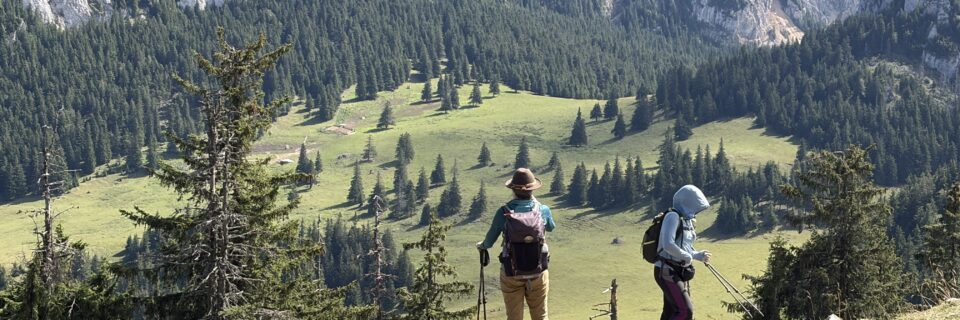
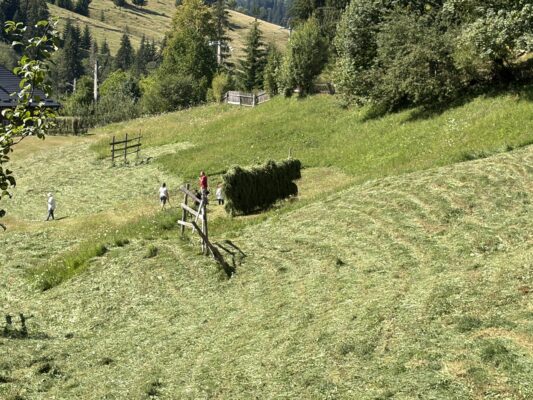
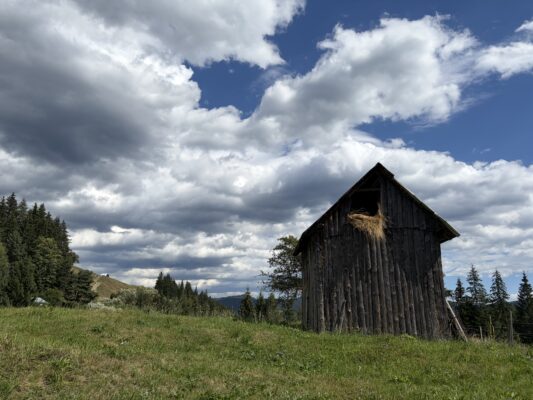
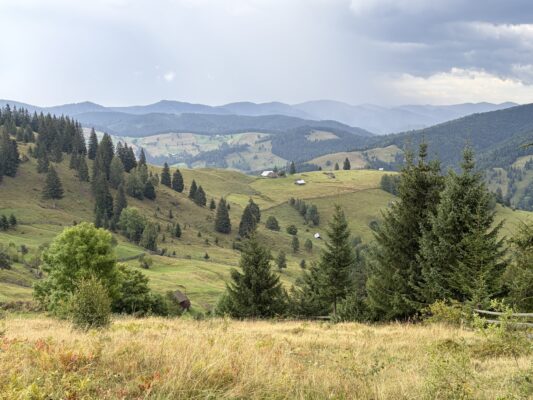
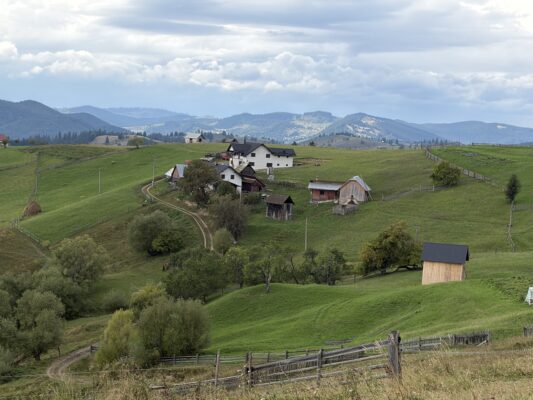
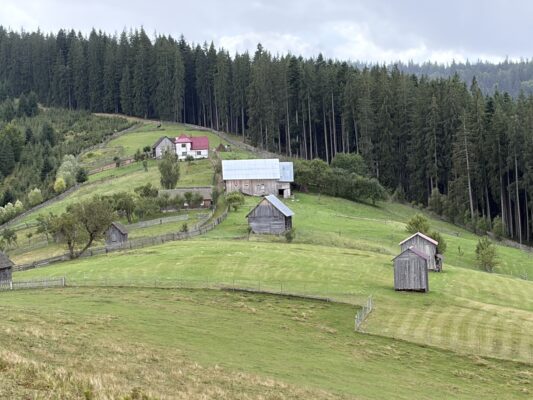
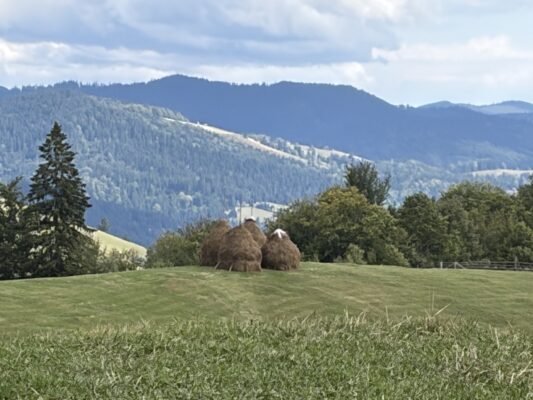
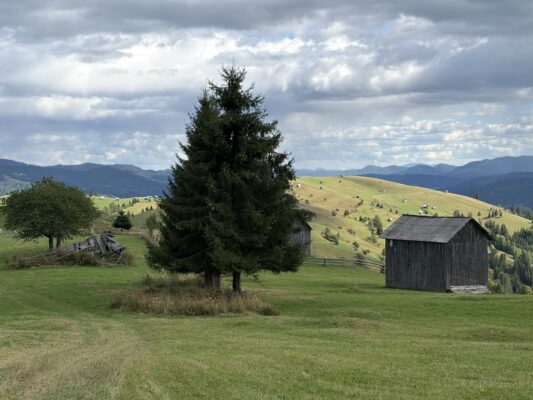
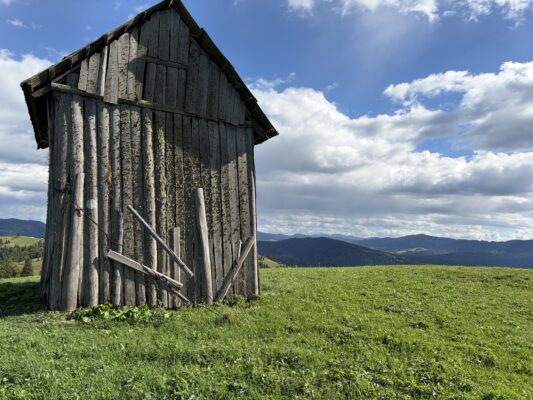
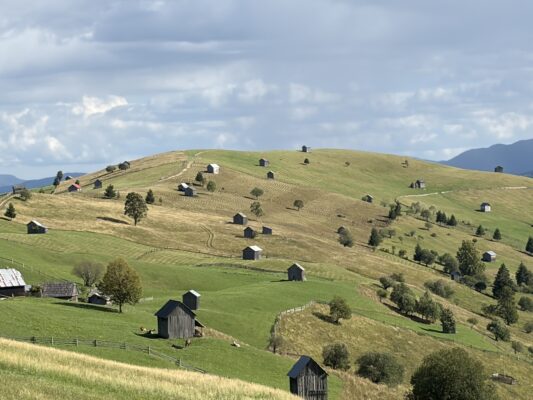
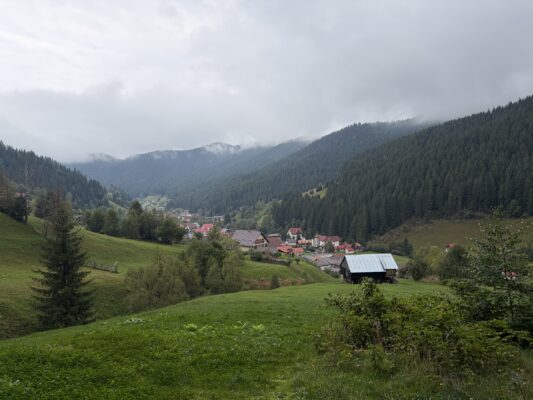
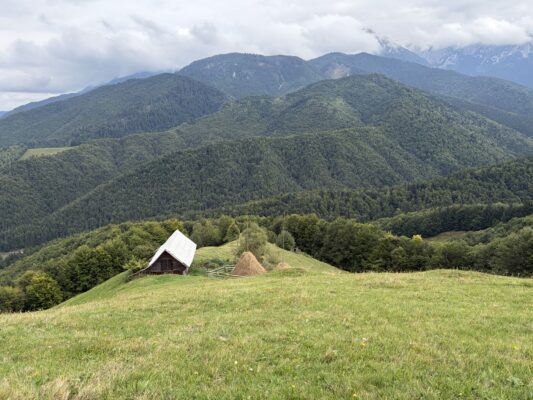
We stay in the principality of Bucovena for three days, an exquisitely beautiful region in the north noted for its wide open spaces, dramatic hills dotted with farms and tiny hay barns, steep valleys, and densely packed forests. We hike daily, ten or eleven miles a day, over and through this photogenic landscape, admiring this bucolic paradise. Think Switzerland without the crowds! I keep picturing Julie Andrews singing The Hills are Alive with the Sound of Music. It is quiet and peaceful. The only people we see are farmers manually harvesting hay. The group splits up and stays at various local homes where we are served delicious Romanian specialties.
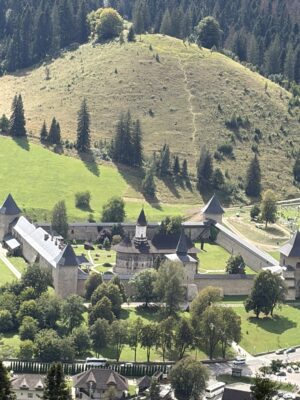
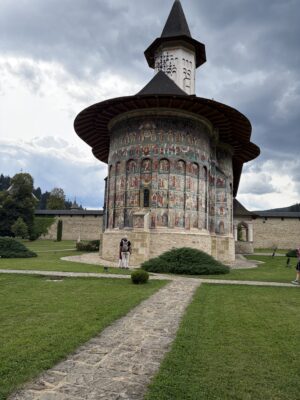
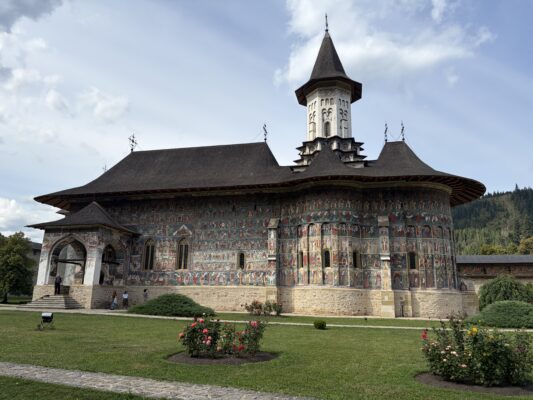
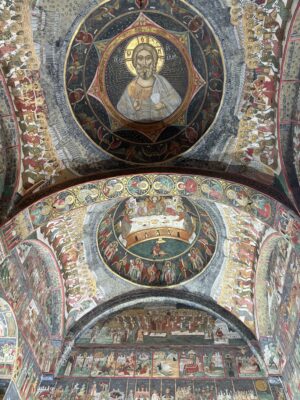
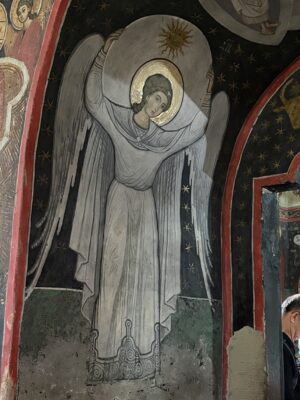
Another highlight is a hike to the 15th century Sucevita Monastery. A World Heritage UNESCO site, it is one of the few such monasteries that has painted frescoes on the outside as well as on the inside of the church, all original and exceptionally well-preserved, the building constructed in only two years and frescoes painted by only two men. Extraordinary!
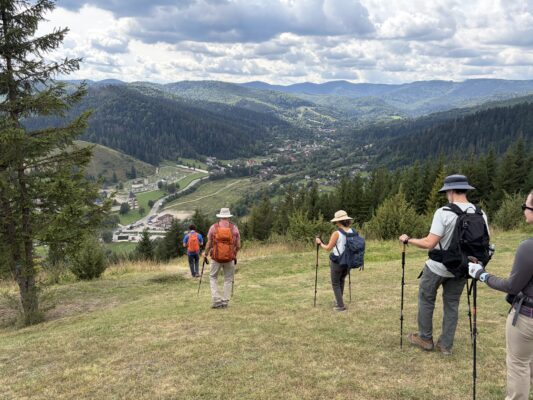
After leaving Bucovena, we drive south stopping, hiking, and staying along the way on parts of the Via Transylvanica, a long-distance trail, 1400 kilometers in length.
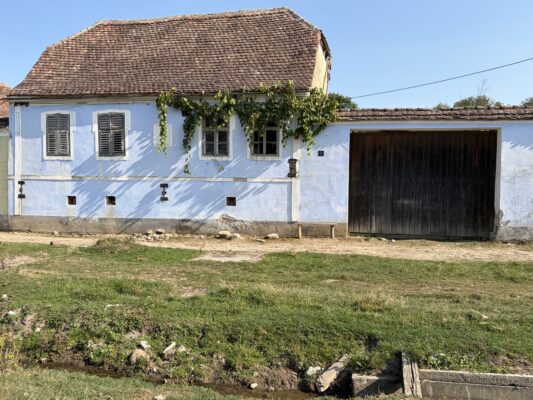
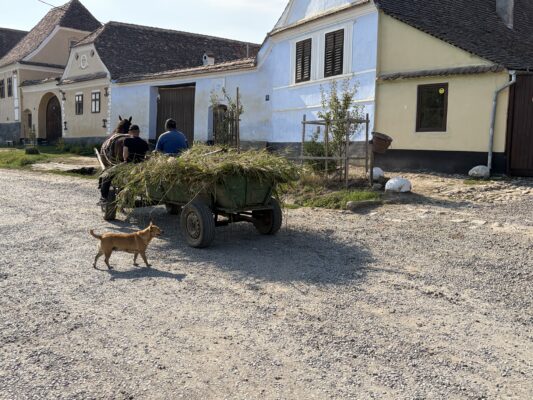
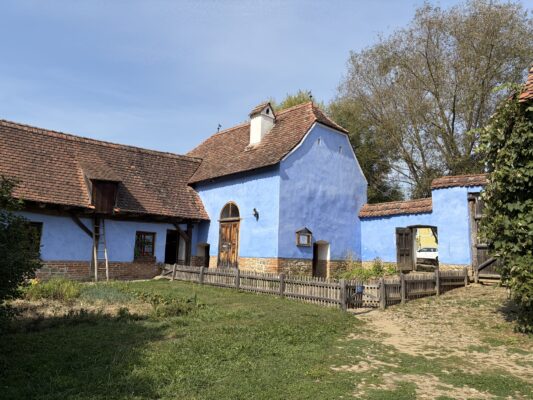
Our final group stay is in the small village of Viscri, where the 300 residents live in picturesque Saxon houses painted in shades of green, blue and yellow. We visit the local church established in the eleventh century and are treated to a fascinating history lesson given by a Saxon woman who was born in Viscri, spent years away in Germany and England, and returned ten years later to become an ambassador for this lovely place.
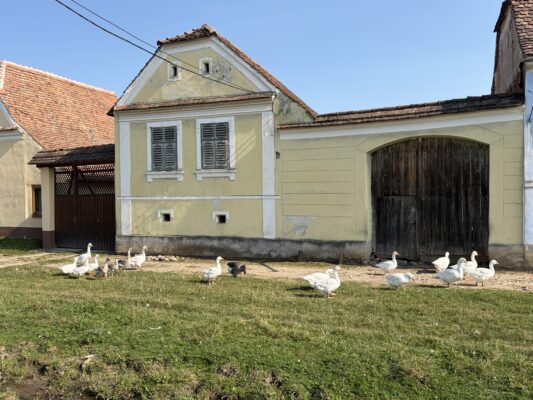
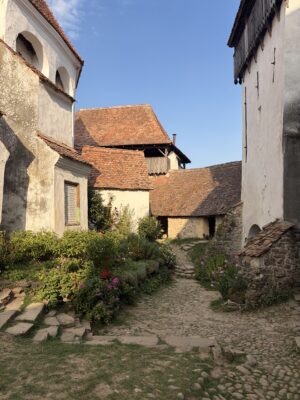
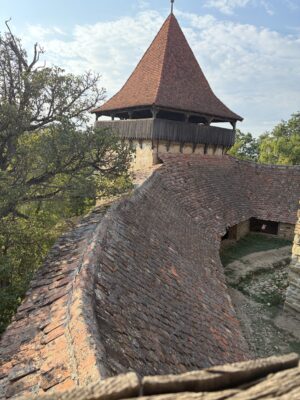
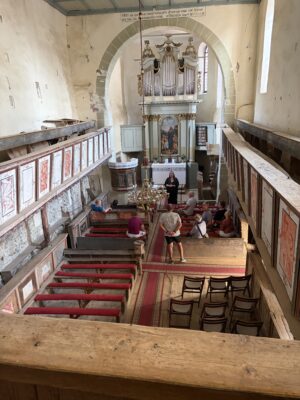
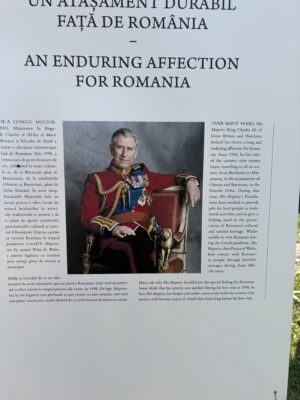
Before departing Viscri, we tour the King Charles house, purchased in 2006 by Charles when he was still Prince. We are told he came for a week annually to ride horses. His Foundations provide jobs for local people in traditional activities and help to preserve Romania’s cultural and natural heritage.
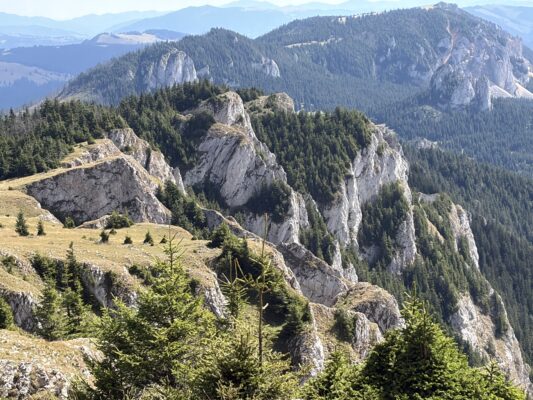
Beginning on September 11, Juliet and I are on our own without a guide but with an itinerary that includes daily hikes of considerable length in the Carpathian mountains of Transylvania. These parts of the mountain range are steeper than on the previous part of the trip. Something that hasn’t changed though, is the magnificence of the scenery.
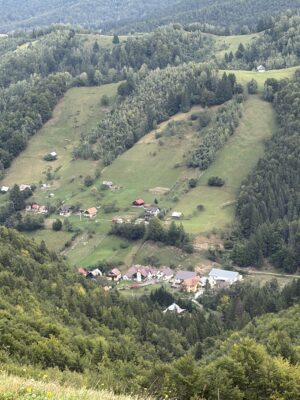
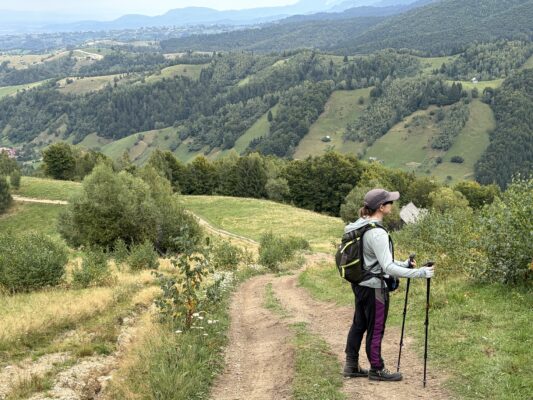
We visit Bran Castle, built as a fortress in 1377, and ultimately remodeled in the early 20th century by the beloved Queen Marie of Romania. Unlike the rural areas we saw previously, this tourist spot is said to be the most visited place in Romania. It is mobbed!
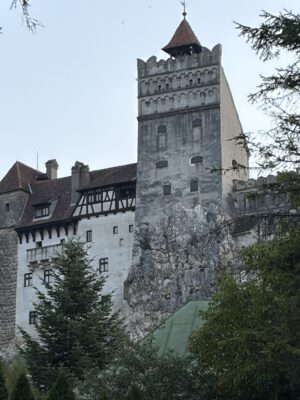
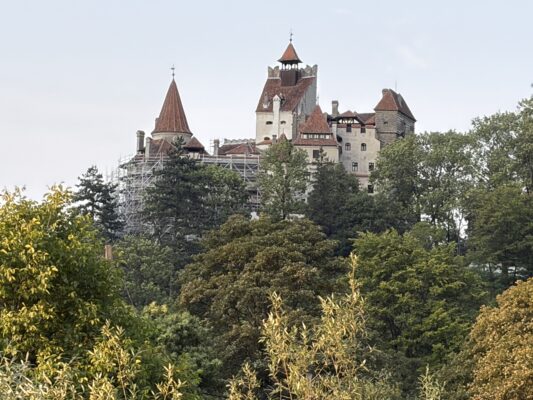
Our next stop is the gorgeous Magura village high in the mountains. We attempt to reach the peak of Piatra Mica but are stymied by the technical climbing that involves scaling sheer vertical walls of scree and steep cliffs.
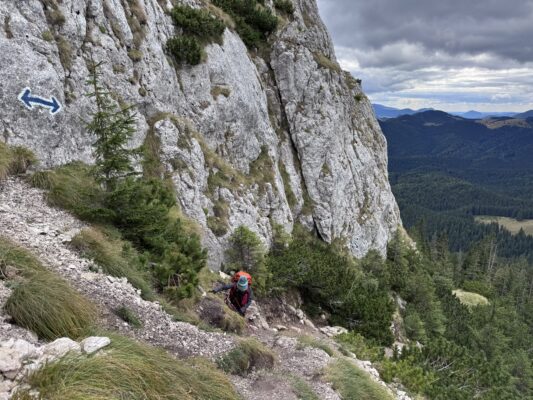
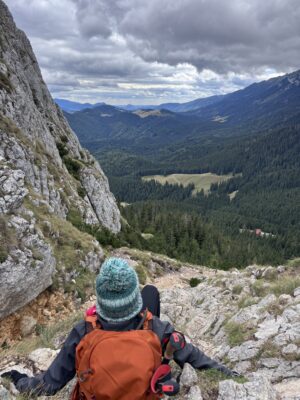
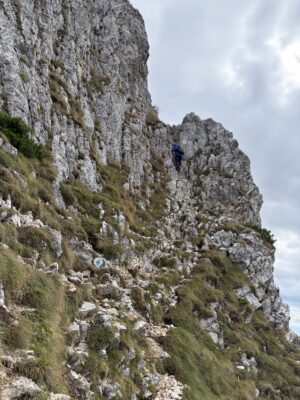
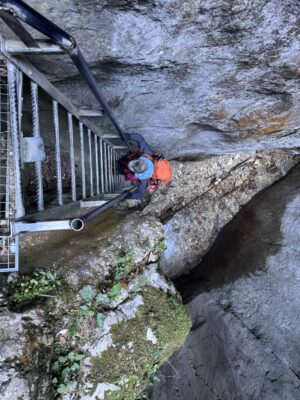
The little blue dot high on the cliff wall is fearless Juliet who is eager and capable of continuing, but alas, I, terrified, am not. We spend nearly 9 hours hiking in all, with nearly 4,000’ elevation gain and loss. Quite an experience!
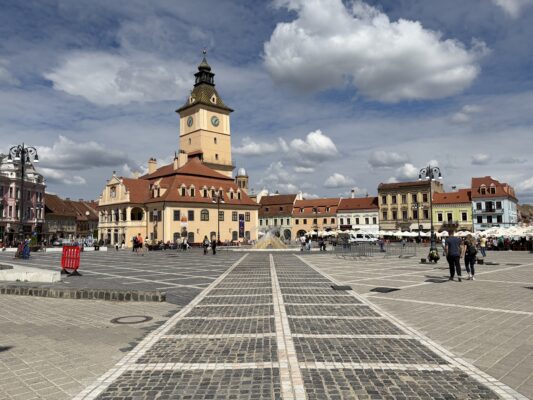
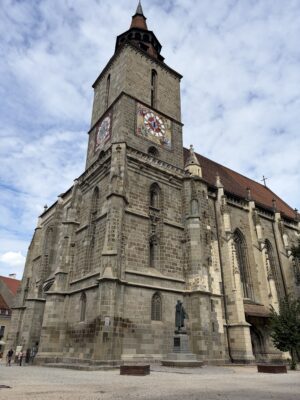
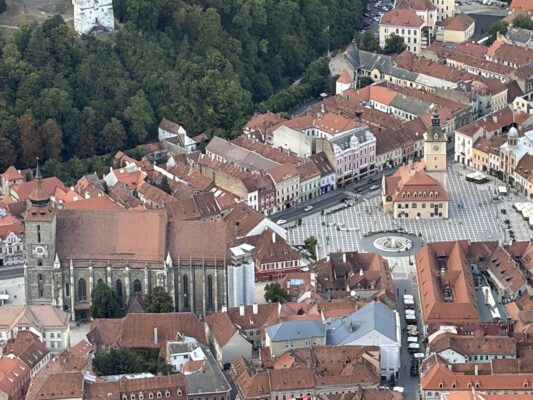
The following day, we travel to the lovely walled city of Brasov. We walk through the central square on its wide pedestrian-only cobblestone streets, visiting the 14th century Black Church, a massive Gothic cathedral, the largest late medieval church between Vienna and Istanbul. We take a cable car up to Tampa Hill and its expansive views of the city below.
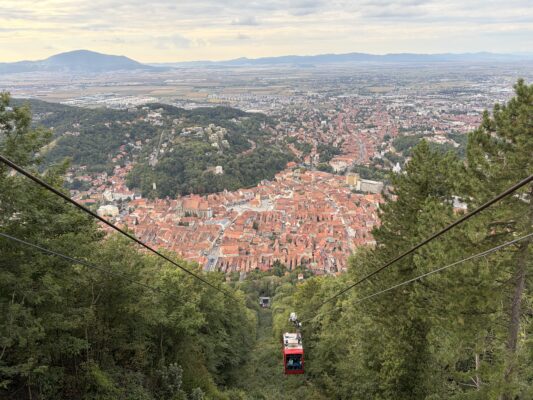
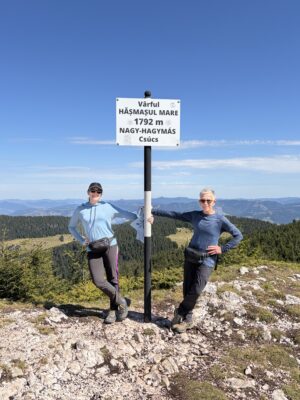
Our final hike, another 8-hour journey, takes us up 3,000’, first climbing vertical ladders through Seven Ladders Gorge, and then a very lengthy, steep, and challenging trail to Piatra Mare, where we are surprised and delighted to see two very friendly donkeys and many foxes from whom we try valiantly to protect our sandwiches from being stolen.
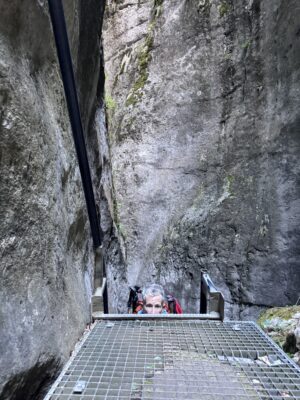
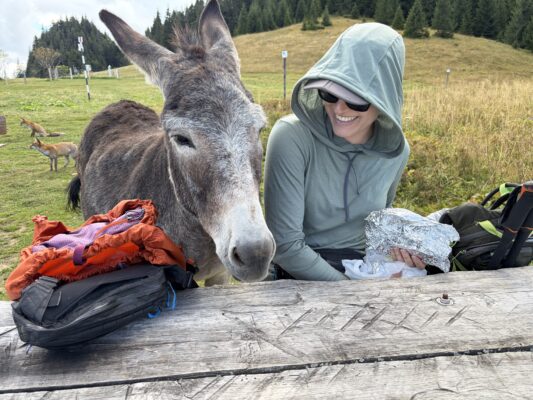
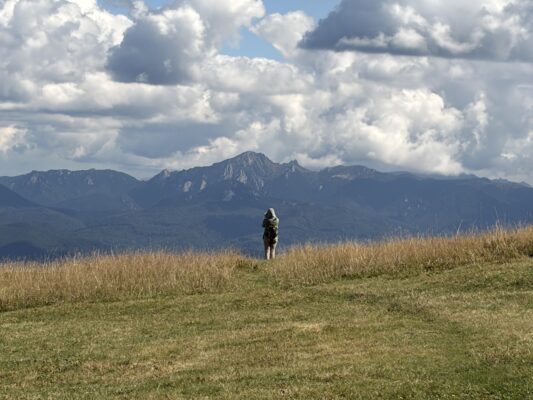
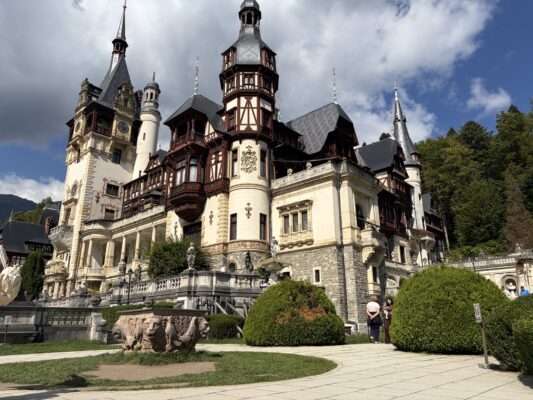
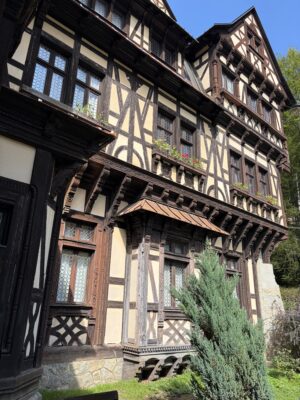
Our penultimate stop is in Sinaia where we visit the Peles and Pelisor castles completed respectively by King Carol I in 1883 and by Queen Marie of Romania in 1903.
We spend our last full day in Bucharest on a lengthy walking tour through this bustling metropolis with a knowledgeable and engaging guide who shares the history of Romania both long and current past.
Juliet flies home and I go to England for several days staying with our dear friends, Nick and Sue. After 5 weeks of remarkable travel experiences, I am ready to stop being a vagabond and looking forward to home and kittens and resting my weary feet for a good while.
3 Comments
You certainly got your hiking in on this trip!! Amazing scenery and history. Looking forward to seeing you
What a spectacular trip around Romania. Happpy to be a small part your puzzle. Kind regards.
Amazing! Looking forward to seeing your future adventures!